
Last updated: July 9, 2026.
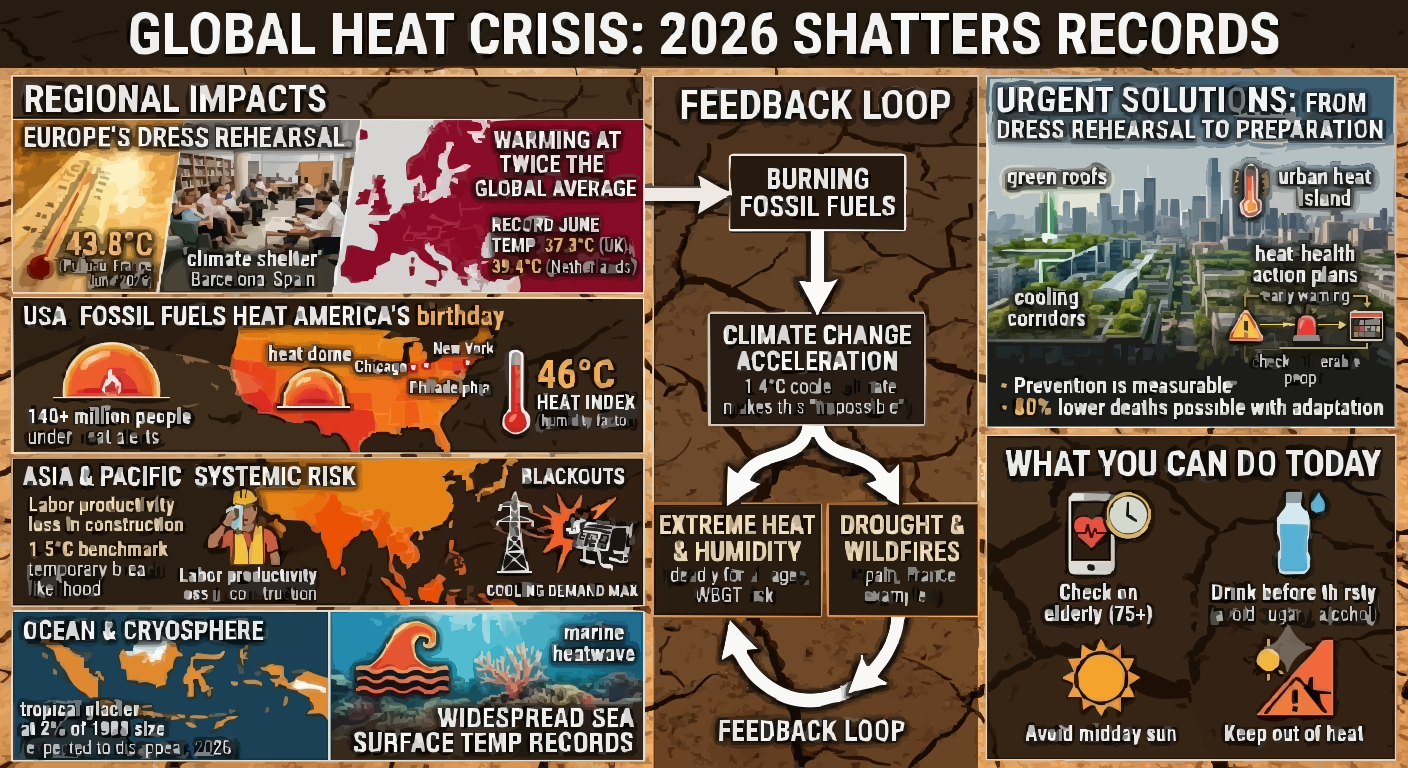
2026 has turned into one of the most intense global heat years on record, with extreme temperatures hitting Europe, the Middle East, South Asia, North America, and parts of Africa and Southeast Asia simultaneously. Scientists point to a combination of human-caused climate change, a strengthening El Niño, record-warm oceans, and stalled high-pressure “heat dome” patterns acting together — not just one bad summer.
Europe: Record Heat, Record Impact
Since late May, Europe has seen back-to-back, record-shattering heatwaves — its most severe on record, according to meteorologists. France hit its hottest day ever on June 24 (national average 30°C, local highs of 43.8°C), with a red alert covering 58 departments. Germany, Czechia, and Poland all hit 40°C, disrupting transport. WHO reported over 1,300 excess deaths since June 21 and more than 150 million people affected across the continent, with some researchers estimating the season’s total excess mortality could reach 15,000–25,000. The heat has since been shifting east toward the Balkans, Turkey, and Central Asia.
Part of why Europe is hit so hard: only about 20% of homes have air conditioning, and much of the housing stock was built to retain heat, not shed it.
United States: A Persistent Heat Dome
A historic heat dome parked over the central and eastern U.S. through the July 4th weekend, putting over 200 million Americans under heat alerts, with heat indices reaching 105–115°F in major cities. Washington D.C. was forecast to see its hottest Independence Day on record.
South Asia: Extreme Heat in Densely Populated Regions
India and Pakistan endured an extended stretch of extreme heat from mid-April into May, with daily highs above 46°C in many Indian cities — one of World Weather Attribution’s flagged events for its severe human and economic toll across two of the world’s most densely populated regions.
Middle East, Southeast Asia & Elsewhere
Heat waves were also reported across the Middle East, Central Asia, and Southeast Asia, with Myanmar setting a new national record of 48.2°C. Australia saw a record-breaking heat dome in January with temperatures near 49°C, and Argentina faced a heatwave threatening crops and livestock the same month.
The underlying driver, per climate scientists, is straightforward: as the planet warms, heat waves are becoming more frequent, more intense, and longer-lasting, and record-warm oceans (partly El Niño, partly long-term warming) are adding extra fuel by pumping more moisture and energy into the atmosphere.
Signs of Heat-Related Illness
- Heat cramps – muscle spasms, usually in legs, arms, or abdomen
- Heat exhaustion – dizziness, headache, nausea, heavy sweating, weakness
- Heat stroke (medical emergency) – sweating stops, body temperature spikes, confusion, disorientation, seizures, or loss of consciousness
If you see signs of heat stroke: call emergency services immediately, move the person somewhere cool, and use any means available (wet cloths, fanning, cool water) to bring their temperature down while help is on the way. Don’t give them aspirin or paracetamol.
How to Protect Yourself, Wherever You Are
Stay cool and hydrated
- Drink water regularly — roughly 2–3 liters a day — even if you’re not thirsty. Skip alcohol and go easy on caffeine.
- Take cool showers, or cool your skin with a damp cloth or spray bottle.
- Wear light-colored, loose-fitting, breathable clothing plus a wide-brimmed hat and sunglasses; tight clothing traps sweat and stops your body from cooling itself.
- Use SPF 30+ sunscreen when outdoors.
Manage your environment
- Avoid outdoor activity and strenuous exercise during peak heat (roughly midday to late afternoon); shift errands and workouts to early morning.
- Stay in the shade — direct sun can feel 10–15°C hotter than official shaded temperature readings.
- Keep your home cool: close windows and blinds during the day to block the sun, then open them at night once outdoor air is cooler than indoor air.
- No AC? Spend 2–3 hours a day somewhere air-conditioned — a mall, library, museum, or official cooling center.
- Fans help, but above roughly 35°C they may not be enough on their own — and don’t point one directly at yourself in a room hotter than 32°C, since it can dehydrate you faster than it cools you.
Look out for others
- Check in on elderly neighbors, relatives, and anyone with heart, lung, or kidney conditions, or living alone — they’re at the highest risk.
- Never leave children, elderly people, or pets in a parked car, even briefly — interior temperatures can become lethal within minutes.
- Watch pets for overheating too, and remember hot pavement can burn their paws.
If you feel unwell
- Move to a cool place right away, rest, and rehydrate.
- If cramps last more than an hour, or you feel faint, confused, or stop sweating, treat it as an emergency and get medical help immediately.
Health officials, including WHO, are increasingly urging governments to treat extreme heat as a recurring, predictable seasonal risk — the way flu season is planned for — rather than a one-off emergency. Given how widespread and repeated these heatwaves have been in 2026, it’s worth having your own “heat plan” ready — cool spaces you can reach quickly, and a check-in routine for vulnerable people you know — well before the next wave arrives, not scrambling once it does.